New eharmony Research: Redefining Love After 40
What does love look like after 40? For many Australian singles, it looks more intentional, flexible, and shaped by life experience. After marriage, long-term relationships, or raising children, adults over 40 are approaching dating with a clearer understanding of what they want — and how relationships fit into their established routines, families, and independence.
Singles are saying that this chapter of dating is defined by both practical realities and evolving ideas of commitment. With a majority of singles with children open to maintaining separate households, many are embracing non-traditional relationship structures that prioritise stability and flexibility. At the same time, long-term partnership now outweighs marriage as a top relationship goal, while interest in companionship without labels increases with age.
New eharmony data explores this new era of dating—where commitment is intentional, independence is valued, and love is defined on your own terms.
Table of Contents
Singles Get Behind ‘Living Apart Together’

Home is where the heart is — but for many singles over 40, that doesn’t necessarily mean sharing the same address. New eharmony data suggests more than 8 in 10 singles with children (83%) are open to — or would consider — maintaining separate households in a long-term relationship to preserve family routines or reduce the stress of blending households.
This includes:
- 38% who would maintain separate households
- 45% who would consider it
This mindset reflects a growing shift toward “living apart together” (LAT) relationships — where couples maintain independence while building committed partnerships.
Susie Kim, eharmony relationship expert says:
“For people over 40, especially those with children, relationships take place within a context of existing routines and responsibilities that don’t always easily merge. Living apart together lets people build a relationship without disrupting the stability of the existing relational ecosystem.”
Women are slightly more open to this arrangement than men (41% vs. 35%), suggesting that those managing family logistics may particularly value maintaining established routines.
Interest in living apart together also increases across key life stages:
- 42% of singles aged 50–59 say yes
- 37% of singles aged 60–69
- 35% of singles aged 40–49
Encouragingly, it’s not the idea of blended families that concerns singles. In fact, 59% of singles say they feel comfortable becoming a step-parent or step figure, suggesting openness to new family dynamics — just with a more thoughtful and flexible structure.
This shift reflects a new model of commitment — one where emotional closeness doesn’t require merging every aspect of life.
Rewriting the “Rules” of Commitment
Alongside changing living arrangements, 40+ singles are also redefining what commitment looks like more broadly. Rather than focusing on traditional milestones, many are prioritising meaningful connection and companionship.
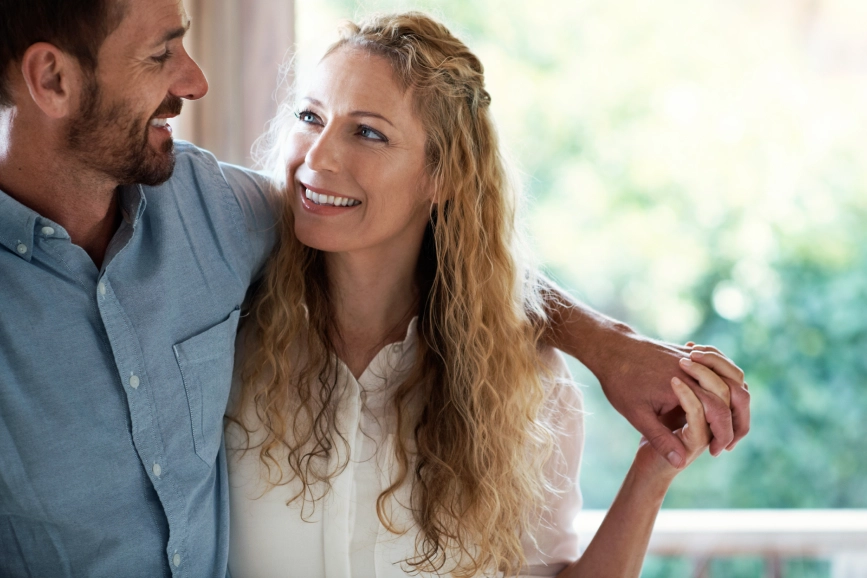
New eharmony data reveals that long-term partnership is the top relationship goal for 26% of singles, outweighing marriage (13%). At the same time, 22% say they’re looking for someone to share life experiences with, further highlighting a shift toward companionship-driven relationships.
What kind of relationship are you looking for now?

26%
Long-term committed relationship
22%
Someone to share life experiences with
14%
Companionship without labels
13%
Marriage
Interestingly, the same proportion of singles seeking marriage are open to companionship without labels, suggesting that traditional definitions of commitment are evolving.
This openness becomes even more pronounced with age:
- 10% of singles aged 40–49 are interested in companionship without labels
- 19% of singles aged 50–59 are interested in companionship without labels
- 30% of singles aged 60–69 are interested in companionship without labels
These findings suggest that as people gain life experience, relationship priorities often shift away from milestones and toward emotional connection, compatibility, and shared experiences.
According to eharmony relationship expert, Susie Kim
After divorce or long-term relationships, some people are focusing on the quality of connection, intimacy and companionship, rather than needing the security of a particular label.
Together, these trends show that 40+ Aussies aren’t stepping away from commitment — they’re redefining it. From living apart together to prioritising companionship, modern relationships after 40 are increasingly built around flexibility, independence, and emotional alignment.
Methodology
This report was commissioned by eharmony and conducted by Innofact. It was fielded online in February 2026 and surveyed over 6,000 participants. Participants qualified if they were aged 18+ and single. Results were weighted to be nationally representative.